
Forehand Wrist & Forearm Biomechanics
The Wrist Is Not Responsible for Topspin
5/13/20264 min read
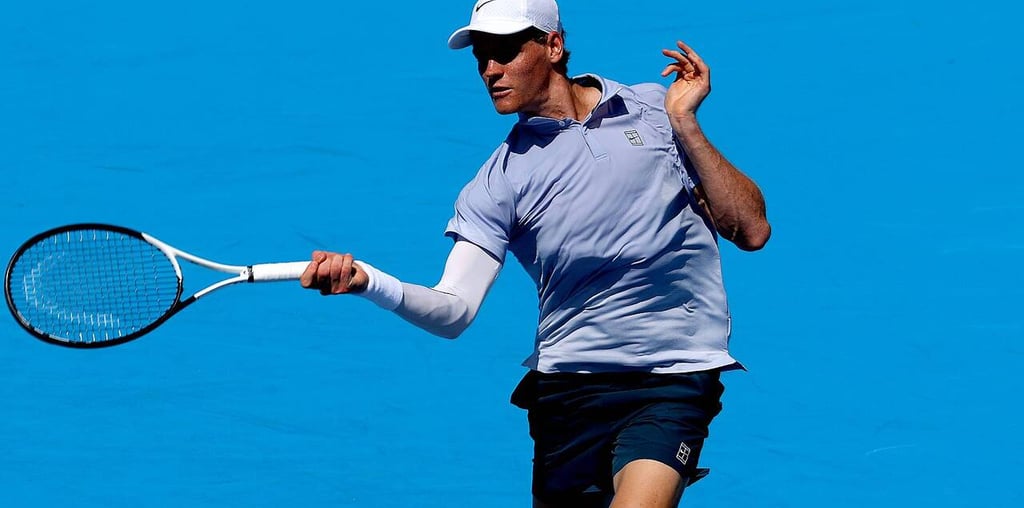
One of the biggest myths in tennis is that your wrist is responsible for generating topspin on the forehand. You’re going to learn why that’s not actually true, and more importantly, what you should be focusing on instead if you want to create heavy, effective topspin on your forehand.
Before getting into that, you first need to understand what topspin actually is. A great way to practice this is with a topspin pro. This is a great device if you want to practice shadow swings and better understand the swing path required to generate topspin on any shot in tennis.
Deviation
Now the question becomes: how is that spin being created? Are you using your wrist, or are you using other parts of the arm to make the ball spin? Before answering that, you first need to understand the movements of the wrist itself. Two other important wrist movements are ulnar deviation, where the pinky moves toward the outside, and radial deviation, where the thumb moves inward toward the arm. These movements are definitely present during the execution of a forehand stroke.
Active Wrist?
Now, let’s break the myth that the wrist is actively responsible for creating topspin on the forehand. The reason it’s not possible becomes clear when you actually isolate the wrist. If you make contact with the ball and only try to use your wrist, you’ll notice that the range of motion is extremely limited. The wrist basically stops moving shortly after contact.
Not only is the timing almost impossible because contact with the ball happens in mere milliseconds, but from a biomechanical standpoint, the wrist simply doesn’t have enough range of motion to generate the kind of topspin people think it does. You can even try this yourself at home. Hold your forearm still and try to roll the wrist upward to create topspin. You’ll quickly notice that the racket stops because the wrist physically blocks further movement.
Pronation
So what’s really happening on the forehand isn’t wrist movement — it’s forearm pronation. Pronation is basically turning the palm toward the ground. When you hit a topspin forehand, instead of using your wrist to create spin, you are pronating your forearm. That turning motion is what’s actually taking place.
If the wrist truly were responsible for topspin immediately after contact, then biomechanically, you would need to move from ulnar deviation into radial deviation right after hitting the ball. But when you watch top players in slow motion, you simply don’t see that.
What you actually see is that shortly after contact, the wrist remains extended and in ulnar deviation. Only later, once the racket reaches its vertical point in the follow-through, does the wrist begin moving into flexion or radial deviation. That movement does not happen during the critical moment of contact. What you’re seeing is forearm pronation.
This is important because the wrist needs to remain protected. Think about how much force goes through the racket when you hit a forehand hard. The wrist would never survive long-term if it had to absorb all of that force while actively snapping through the ball. That’s why the wrist remains stable, and you can clearly see this in slow-motion footage.
Professional Assumptions
Now, the confusing part is that when you watch players like Nick Kyrgios or Ben Shelton in slow motion, it can sometimes look like they’re using their wrist. But what you’re actually seeing is isolated forearm pronation. Their forearm is rotating rapidly while the wrist remains stable. This often happens when players are redirecting pace or generating spin off an incoming fast ball. A player like Shelton is so strong that he can even generate massive forehand pace using mostly forearm pronation on slower balls.
So even though it visually looks like wrist action, the same biomechanical principles still apply: the wrist remains stable at contact, and the real movement comes from forearm pronation.
Forehand Finish
One of the most important things to learn about topspin on your forehand is to finish. If you abruptly stop your swing, the ball may technically spin, but the shot will be thin. You won’t get penetration through the court, and the topspin won’t be heavy. Instead, it will be weak and spinny, with little effectiveness. That’s why it’s so important to extend and finish the stroke fully.
Here’s a great way to naturally encourage proper forearm pronation without consciously trying to manipulate the wrist. If you’re right-handed, think about swinging toward your left cheek while focusing on the back of your hand. In other words, imagine the back of your hand moving toward your left cheek during the finish.
When you do this, several good things happen automatically. First, you maintain acceleration through contact instead of slowing down to consciously “roll” the racket. Second, you naturally create the pronation needed for topspin without forcing it. By focusing on the finish position, your body intuitively organizes the movement correctly.
Wrist Injuries
Under no circumstances should you try to use your wrist to create topspin. The moment you try to snap the wrist at contact consciously, you’ll be forced to shorten and slow down your swing to time that movement. That can completely ruin your forehand consistency and power, and it can also lead to wrist injuries or tennis elbow.
This is especially important for beginner and intermediate players. Advanced players already have years of muscle memory built into their strokes. So even if they receive bad advice like “snap the wrist,” their body often still defaults to proper forearm pronation. But beginners and intermediates don’t yet have that motor pattern established, meaning they may literally try to flick the wrist at contact, which is extremely dangerous.
Something even worse than trying to roll the wrist upward is snapping forward through the ball by going from wrist extension into wrist flexion. That movement places massive stress on the wrist and elbow, and it’s something you should avoid completely. Not only will your balls often fly long, but this movement can seriously injure your wrist over time.
Final Thoughts
So the next time you step on court, focus on finishing with the back of your hand toward your left cheek. You’ll likely notice that your forehand develops more natural topspin, but most importantly, your wrist will remain safe and protected. When forearm pronation is responsible for the movement instead of the wrist, the wrist stays stable during contact — and that stability is exactly what keeps it protected.