
Racquet Releases Influence Recreational Players
Why You Shouldn't Worry About New Racquet Releases
1/28/20264 min read
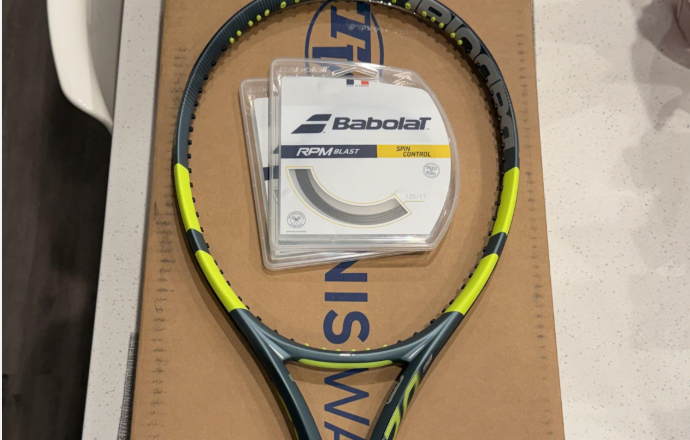
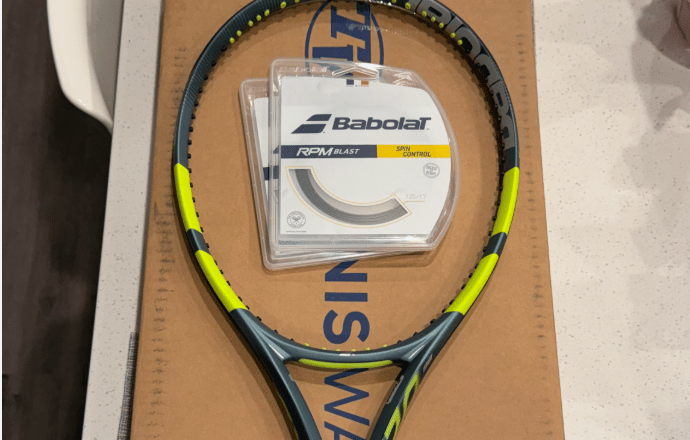
It’s January of 2026, and there are so many new rackets coming out. We’re going to get new Speeds, new VCOREs, new Pro Staffs, new Blades, and new Pure Aeros. I want to use this time to share my excitement about new tennis rackets. But I also want to issue a warning: a lot of players are looking to improve their game, and they want to do so through the new technology that keeps coming out every few years.
And the whole thing with new technology is not a scam per se. Racket companies are working hard to optimize rackets, and rackets continue to improve. But for a long time — possibly for the last 10 or 20 years — rackets have been very similar.
Different Specs
When it comes to playing with different rackets, of course, you can decrease your level by playing with the wrong racket. I’m going to use some extreme examples. Let’s say you play with a Percept that’s extremely heavy, or you play with a Pure Drive 100 that’s lighter — you’re going to feel a difference, and you might play worse with one or the other. In my experience, most recreational players will find it more difficult to play with the heavier one. But that’s another topic for another day.
So yes, significant differences in racket specs can negatively impact your game. No doubt about it. But how about when the differences are very small? And that’s exactly what happens when racket lines get updated.
I am certain that when the new Pure Drive comes out, it’s going to have very similar specs: 300 grams static for this particular model, head-light balance, and it’s going to be a little bit stiffer, close to 70 RA.
Superstitions
Now, these small, minute differences in racket specs can wreak havoc on a player’s psyche. Even though these differences are so small that they’re not going to change your game, they feel big in your mind. If I play a set with the Pure Aero 98 2023 version and then play another set with the Pure Aero VS from 2020, there’s not going to be any difference that’s detectable in performance.
But in my mind, I know there’s a difference. The racket feels different. So I exaggerate these minute differences and make them bigger than they really are — and I end up driving myself crazy.
Settling Down
So here’s the warning I’m issuing for 2026. Yes, there are some exciting rackets coming out. And if you are looking for a racket, don’t buy the old version, even if it’s discounted. Let’s say you’ve never played with the Aero before. You test it, you like it, and this is the racket for you. Don’t buy the old model just because it’s on sale. Buy the new one.
Why? Because I want you to stick with the racket for many, many years. I don’t want you to change rackets. I don’t want you to fall into the trap of thinking that new technology is going to improve your game. It won’t. Look at the pros. Do they switch rackets? Yes. But the vast majority play with the same racket for many years.
Once you’ve found your racket, stick with it as long as you can — and stock up on them. Your racket is going to wear out, especially if you string it a lot. That puts pressure on the frame, and it can deteriorate over time. No doubt about it.
More Sales
Remember: new and improved technology won't change your game. If we’re talking about small differences in a modern racket, the racket is going to be the smallest contributor to your tennis development. What will improve your tennis are reps on the court, technical changes, fitness, lifestyle, and consistency.
Now, for those of you who love a racket and then test the new version and get frustrated because it doesn’t feel the same, here’s what I think is happening. Racket manufacturers want to sell rackets. That’s not a bad thing. They want to stay in business and make rackets as good as possible. So they tweak them every few years.
The frustrating part is this: rackets that used to be flexible and controlled often become stiffer and more responsive over time — the opposite of what players fell in love with. And rackets that were stiff sometimes get softer. So players who loved the original version get annoyed. I’m definitely one of those players. I want new versions to feel exactly the same — but that’s unrealistic.
Improving Your Game
I think racket companies are trying to reach a wider audience. Some players like flexible rackets, some like stiffer ones. By shifting the feel slightly, they appeal to more players and potentially sell more rackets. That’s my theory behind the constant “new and improved” cycle.
That said, I don’t want to generalize. Some new rackets genuinely do feel better than previous models.
So my advice is simple: become like me. I don’t think about my racket at all anymore. And I want you to get there too. When I play poorly now, I don’t look down at the racket and blame it. I remember playing well a few days ago with the same racket. It’s not the racket — it’s me.
Final Thoughts
Now, I want to finish with one last thing. A lot of you buy rackets as a hobby. Some of you are racket collectors.
If I ranked the rackets I see most often among players who train at my club, my top three would be Tecnifibre, the Wilson Blade, and, number one, any type of Babolat. And I think a lot of that has to do with Alcaraz. Ten years ago, it was the RF97 that dominated. What players at the very top use has a massive influence on what everyone else buys.