
Sinner Doesn't Need A Backhand Slice
Why The Italian Rarely Uses The Slice
12/3/20255 min read
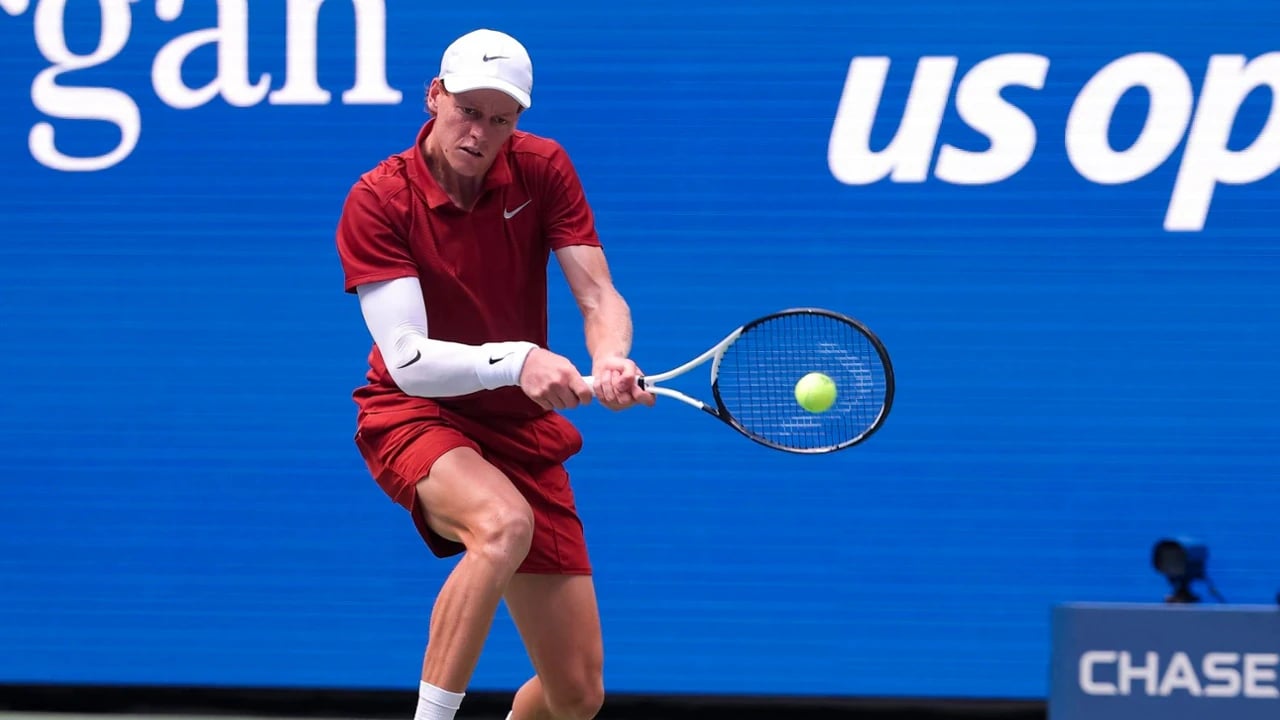
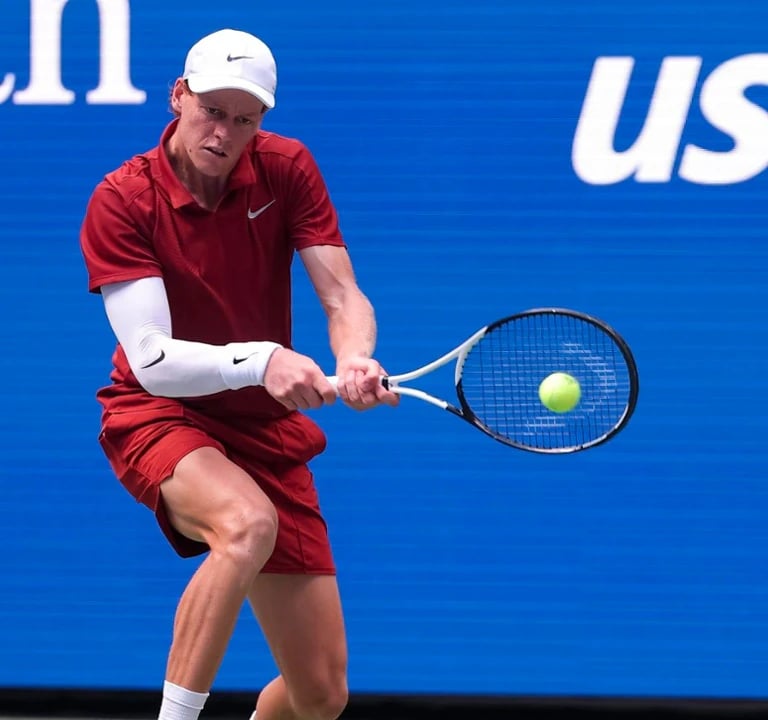
Jannik Sinner just won the ATP Finals. He finished the year ranked number two in the world, very close to number one. He won two Grand Slams and had one of his best seasons. Now, we know that Jannik Sinner has added versatility to his game. His drop shots have gotten a lot better. He displayed his feel in the first set tiebreak against Alcaraz in the ATP finals, where he hit two spectacular lobs, one on the run with a backhand and then a forehand topspin lob. Having versatility in your game can offer many benefits and help you beat players you've had trouble with in the past by expanding your stroke repertoire. That certainly has helped Jannik become the player he is and keep getting better, beating a player who’s very similar in level. That’s Carlos Alcaraz.
One interesting thing about Jannik Sinner's added versatility is that he’s also added an improved volley to his repertoire. One shot underutilized in his game is the slice backhand, which raises an important point. Is it essential for Jannik to start utilizing more slice backhands? And the answer is no. And the reason why I’m saying no is because of the strength of his two-handed backhand.
Preparation
Jannik Sinner has low preparation on both his forehand and his backhand. So, that’s going to help him on fast surfaces, where the ball might bounce lower, for example, on grass. I think Jannik Sinner will give himself a chance to win Wimbledon every year he plays. And he’s generally going to be very difficult to beat on fast surfaces and also low-bouncing surfaces, not only because of his aggressive play style, but also because he handles fast balls and low balls well. His quick preparation is also an aggressive court position, and he can maintain his timing without being rushed.
Now, another thing that Jannik Sinner does really well is stay low, and that’s possibly due to a skiing background. Jannik Sinner was an exceptional skier and stays really low on his shots when he has to, and he has no issues handling low balls. Alcaraz is very similar in that regard. Both of these guys handle low balls exceptionally well, and that’s why they’re so good on grass. But if you combine Jannik Sinner’s abilities to get very low on his ground strokes and also that low preparation that he has, he handles low balls exceptionally well.
Heavy Shots
But there’s more to the story. Jannik Sinner’s backhand is also one of the heaviest backhands on the tour, if not the heaviest. I think Casper Ruud also has a very heavy two-handed backhand. But Sinner has tremendous power on his backhand and adds a lot of RPM.
And when it comes to handling low balls, not just at the elite level, but for everyone playing tennis, you have two options where you can hit a quality shot back. When somebody gives you a low ball, you can slice it back, or you can spin it back. Both solutions will be reasonable. But what a lot of players do is settle for the slice because it’s not so easy to get down there and hit a topspin ball very aggressively when it’s that low. Generally, when you play a low ball, you will not come out of that low position you’ll have to get into
Mixing It Up
For those reasons, many players feel uncomfortable hitting topspin on a low ball and end up slicing it back. Because Jannik Sinner is so good at handling low balls on the backhand, the fact that he doesn’t slice his backhand that much is not a problem at all. But how about the idea of versatility, involving more backhand slice to change the rhythm of the point and take away the opponent's rhythm, possibly? Well, that certainly is opponent-dependent. It’s score-dependent.
The context of what’s happening in the match is also surface-dependent, of course. If you’re utilizing slice backhands, they’re going to work really well on grass and clay. And to some extent, they can even work on indoor surfaces, low-bouncing fast courts. It is a great strategy to utilize.
But the interesting thing, not only about Sinner but the modern generation of players, is that they don’t really slice the backhand that much because a lot of players can handle low balls with a tremendous amount of spin, and they don’t really need to use the slice as a defensive shot that much. Even on the run nowadays, where players in the past might have settled on hitting a slice on the run, players are now so good at hitting open-stance backhands, and the defensive backhand has improved tremendously over the past few decades.
No Benefit?
However, in Jannik Sinner's case, versatility could be advantageous in certain circumstances. Still, generally, when you have the best two-handed backhand in the world, and you decide not to hit it, you actually put yourself at a disadvantage. Just because Sinner’s qualities on the backhand are so superior to everybody else on tour, he has an advantage when he gets into backhand exchanges, and he’s also exceptionally good at changing directions on the backhand.
And even though Carlos Alcaraz does slice the backhand more than Sinner, even for him, it doesn’t make a lot of sense to slice the backhand when he has that unbelievable two-handed backhand that’s the second best on the ATP tour, right behind Sinner. So in the case of Sinner and Alcaraz, even though Alcaraz is the most versatile player by far on tour, he doesn’t slice his backhand that much.
Yes, he might hit a lot of drop shots on the backhand or might even hit short slices. That’s different from a true slice backhand that you hit with pace, and you’re going for a little bit more penetration in the court. That one, Carlos, doesn’t utilize it as much, and Sinner utilizes it even less than Alcaraz.
Rest Of The Field
Now, when it comes to other players, we still have some players who slice quite a few backhands, and that’s Grigor Dimitrov and, of course, Dan Evans. And he slices a lot of backhands. In the past, we had players like Emilio Sanchez or Steve Johnson, and we even saw this on the WTA tour with Pam Shriver or Steffi Graf, who sliced close to all of their backhands.
Now, we will see this less and less in the coming years on both the ATP and WTA tours, possibly due to modern equipment and increased strength allowing players to generate topspin off low balls more effectively than at any other time in tennis history. Returning a slice backhand has become less complicated over the last few decades, and hitting a slice backhand has become less of a beneficial tactic.
Final Thoughts
Now, despite what I just said, I’m telling you to practice your one-handed slice backhand even if you happen to be a two-handed backhand player, because there is a family of shots in the game of tennis. And that is the one-handed slice backhand, the one-handed backhand volley, the one-handed backhand drop shot, and the one-handed backhand volley drop shot. All these shots are very similar in the sense that they’re all hit with a continental grip, and they all have a similar preparation and a similar swing path. Of course, there are differences between these shots, no doubt about it, but they all have a similar feel to them.
So, practice slice backhands to get more comfortable, number one, hitting the ball with one arm on the backhand, which is difficult, especially for juniors. This can not only help your one-handed backhand slice but also your one-handed backhand volley; it can also help your drop shots, and it can improve the feel of playing the ball with one arm on your backhand side. So, I recommend that you practice your backhand slice. Whether you'll use it in a match, I can’t give you that advice, because it depends on various factors we might discuss in the future.